
What the Fourth of July Actually Celebrates (And What We Forget)
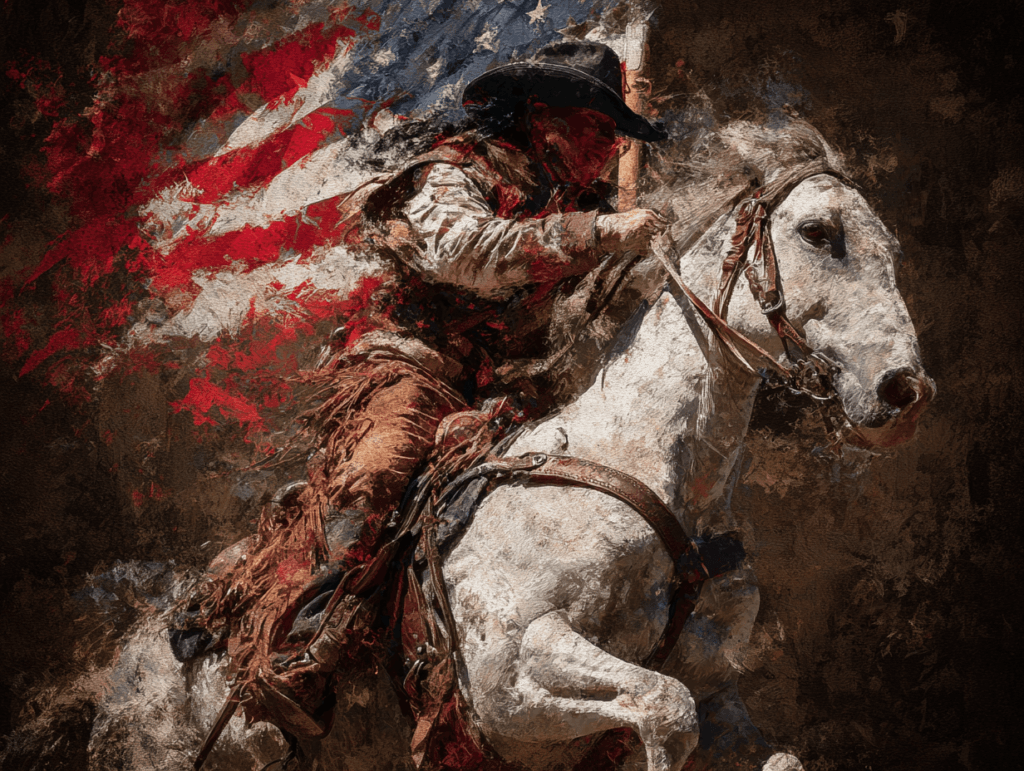
The Fourth of July arrives each year already complete.
The calendar tells us it’s a celebration. The rituals are prepared in advance. The meaning feels settled.
Fireworks, gatherings, music, leisure.
But what we inherit is not the moment itself — only its outcome.
July 4th does not mark a victory. It marks a decision made before victory existed, when the future was unclear and the consequences were immediate. What we now experience as tradition began as an irreversible choice, taken without certainty of survival.
Independence was not announced after safety was secured. It was declared while danger was still active.
Those who signed did not know how history would remember them. They knew only that they were stepping out of protection, removing the option of retreat, and placing their names beneath words that could not be unsaid. There was no applause waiting on the other side of the declaration — only reaction.
That is the part we rarely sit with.
The Fourth of July is often framed as a celebration of freedom, but at its core, it commemorates something more uncomfortable: the moment when ambiguity ended. When neutrality became impossible. When a collective identity was chosen in public, with no guarantee it would be allowed to exist.
This article is not about fireworks or nostalgia.
It is about remembering what the day actually represents — and what tends to fade when celebration replaces memory.
Independence Was a Dangerous Choice, Not a Festive One
In 1776, declaring independence was not symbolic. It was an act with immediate consequences.
To the British Crown, it was treason — a formal announcement that reconciliation was no longer possible. There was no legal protection for the men who signed the document, no guarantee of military success, and no guarantee that foreign allies would come to their aid — or come soon enough to matter.
The British Empire was not a distant abstraction. It was organized, experienced, and already present. Its army had crushed rebellions before. Its navy controlled trade routes. Its reach was global. Declaring independence meant inviting a response from the most powerful political and military force of the era.
This is what we often forget when we speak of the Declaration as if it were inevitable.
Nothing about it was inevitable.
There were colonists who opposed independence. There were merchants who feared economic ruin. There were families divided by loyalty. There were entire regions unsure whether rebellion was courage or catastrophe. Even among those who supported separation, doubt was constant.
Signing the Declaration meant exposure. Names were not added casually. They were added knowing that, if the revolution failed, those names could be used to confiscate property, imprison families, or carry out executions. The decision did not end at words — it followed the signers home.
Independence, in this sense, was not optimism. It was commitment without reassurance.
We remember the outcome — a nation formed, a narrative stabilized, a holiday created. But the choice itself existed in a space of fear, uncertainty, and irreversible consequence. It was not celebrated when it happened. It was endured.
The Fourth of July marks that endurance. Not the comfort that followed, but the moment when safety was knowingly abandoned in favor of self-determination.
What “Freedom” Meant in 1776 (And What It Didn’t)
When we use the word freedom today, we often mean comfort.
The ability to choose, to express, to move through life with minimal friction. Freedom as personal ease.
That is not what the word meant in 1776.
Freedom then was not a promise of comfort — it was an acceptance of responsibility. To reject outside rule was not to guarantee a better life; it was to assume full ownership of whatever followed, including failure. Independence did not remove danger. It redistributed it.
What was being claimed was not happiness, safety, or moral perfection. It was autonomy. The right to decide internally rather than comply externally. The willingness to govern oneself rather than be governed by a distant authority.
This distinction matters, because it reveals why independence was such a heavy decision.
Freedom did not mean the absence of limits. It meant choosing which limits you would live under. It did not mean peace. It meant the burden of defending your position without the shelter of an empire. It did not mean unity. It meant disagreement handled internally rather than imposed from above.
There were also clear contradictions embedded in that moment — freedoms declared that were not extended equally, ideals articulated that were not yet realized. These tensions did not cancel the declaration, but they did complicate it. Independence was not a completed moral project. It was the opening of one.
What tends to be forgotten is that freedom, as understood at the time, was closer to exposure than to relief. Once independence was declared, there was no higher authority to appeal to. No external structure to absorb blame. The consequences, good or bad, would belong to those who chose the path.
In that sense, freedom was not something granted. It was something taken, along with everything that came with it.
And that is why the declaration mattered. Not because it promised an easy future — but because it accepted an uncertain one without asking permission.
Declaring Independence Is Also Declaring Identity
A declaration of independence does more than change political arrangements.
It establishes identity.
To declare independence is to say, publicly and without retreat, this is who we are now. It draws a boundary between what came before and what must follow. It replaces ambiguity with position.
This is why declarations are so disruptive. They force clarity where compromise once existed. They turn private belief into public alignment. Once spoken, they cannot be quietly withdrawn without consequence.
In 1776, the colonies did not simply reject British rule. They asserted a collective self-definition. They claimed the authority to name themselves, to determine their values internally, and to be judged by those values rather than by inherited structures.
That act reshaped how others were required to respond.
Neutrality disappeared. Allies had to choose. Opponents had to react. Even those who wished to remain undecided were pulled into a reality where indecision itself became a stance.
This is what identity does when it is declared rather than implied.
It creates friction. It attracts support and resistance in equal measure. It demands coherence between words and action, because once an identity is stated, behavior becomes evidence.
Independence, in this sense, was not only a legal transformation. It was a psychological one. A shift from being defined by an external power to being accountable for internal consistency.
And that is why the declaration mattered even before it succeeded.
It forced the colonies to live as if the identity they claimed was already real — before protection existed, before recognition was secured, and before outcomes were known.
That is the uncomfortable power of declaration. It does not wait for permission. It creates a reality that must then be defended, lived into, or abandoned entirely.
The Cost of Saying It Out Loud
Declaring independence does not only clarify who you are.
It clarifies who you are not — and who stands against you.
Once the declaration was made public, there was no neutral ground left to occupy. Those who supported independence were no longer reformers or critics within the system. They were rebels outside of it. Those who opposed it were no longer cautious voices — they were loyalists. Even silence began to carry meaning.
Communities fractured under this pressure. Families split along lines of loyalty. Longstanding relationships were strained by a question that could no longer be postponed: Where do you stand?
This is the cost of declaration that is often softened by time.
It is easier to imagine independence as a unifying force in retrospect than it was in reality. At the moment it was spoken, it intensified division. It forced confrontation. It removed the comfort of ambiguity and replaced it with consequence.
There was also a deeply personal cost.
To sign the Declaration was to accept visibility. Names were not hidden. Responsibility was not diffused. Each signature functioned as a marker — proof of alignment that could be referenced, punished, or remembered.
This visibility is the true price of independence.
It is one thing to believe something privately. It is another to state it publicly and accept that others will respond to it in ways you cannot control. Independence demands that exposure. It trades safety for coherence.
What we often forget is that the declaration did not end conflict — it intensified it. It did not bring clarity without pain. It made disagreement unavoidable and forced accountability into the open.
That is why independence is never quiet when it is real.
It disrupts relationships. It attracts opposition. It reveals fault lines that were previously hidden beneath politeness or inertia. And once spoken, it cannot be retracted without loss.
The Fourth of July marks that moment of exposure — when the cost of saying it out loud was accepted as preferable to the cost of staying silent.
Independence as a Psychological Act
Before independence becomes law, it becomes internal alignment.
Long before borders change or institutions form, a declaration first resolves something inwardly: we will live with the consequences of choosing for ourselves. That decision happens in the mind before it ever reaches paper.
This is the psychological weight of independence that history often compresses into dates and outcomes.
To declare independence is to step out of borrowed certainty. It means no longer relying on external authority to justify decisions, absorb blame, or guarantee protection. It is the acceptance that responsibility will no longer be outsourced — that success and failure will now be owned directly.
This is why independence is difficult even when it is desired.
Ambiguity offers shelter. As long as something remains undecided, it remains reversible. Independence removes that shelter. It replaces the comfort of possibility with the discipline of commitment.
In 1776, the colonies crossed that internal threshold before the war was won. They chose to behave as if the identity they claimed already existed, even though reality had not yet caught up. That psychological shift mattered as much as any military engagement that followed.
It forced coherence.
Once independence was declared, actions could no longer contradict the identity being asserted without eroding it. Every compromise, every retreat, every internal conflict now carried symbolic weight. The declaration created a standard that had to be lived up to, not merely defended.
This is the part of independence that resonates beyond history.
Whether personal or collective, independence always begins the same way: with a decision to accept uncertainty rather than remain protected by indecision. It is not the removal of fear, but the willingness to act without waiting for fear to disappear.
The Fourth of July commemorates that inner shift as much as it does any external event — the moment when responsibility was chosen over permission, and commitment over delay.
What We Celebrate Now (And Why That’s Not Wrong)
Celebration is not a mistake.
It is evidence that the risk endured.
Fireworks, gatherings, and rituals exist because the declaration did not end in collapse. They are not shallow by default; they are a form of relief made possible by survival. A society that could not pause to celebrate would be one still locked in the moment of danger.
In this sense, celebration is earned.
The problem is not that we celebrate. It is that celebration can slowly replace memory. Over time, the outcome becomes louder than the choice that produced it. The comfort that followed begins to obscure the discomfort that preceded it.
Ritual simplifies. That is its purpose. It takes something complex and renders it repeatable. But when repetition detaches from understanding, meaning thins. Freedom becomes aesthetic. Independence becomes atmosphere.
This is why the Fourth of July often feels festive rather than reflective.
We inherit the benefits of a decision we did not have to make, and it is natural to experience them as normal rather than extraordinary. Fireworks feel like tradition because danger feels distant. Leisure feels appropriate because survival feels guaranteed.
There is nothing inherently wrong with this. A society that could never move beyond its founding trauma would be trapped by it. But forgetting entirely creates a different problem: independence becomes something we consume rather than something we understand.
The holiday does not ask us to reenact fear or reject joy. It asks only that we remember why joy was not always available — and why independence was never meant to be effortless.
Celebration honors success. Memory honors cost. The Fourth of July needs both to remain meaningful.
Remembering the Moment Before the Fireworks
Before the sky was filled with light, there was only uncertainty.
No one knew how long the conflict would last, how much it would cost, or whether the declaration would end in freedom or ruin. There were no guarantees waiting on the other side of the words. Only consequences that would have to be carried, whatever they turned out to be.
That moment — before outcome, before tradition, before celebration — is what the Fourth of July truly marks.
It marks the point at which a people chose definition over delay. Responsibility over protection. Exposure over silence. Independence was not granted by time or validated by success. It was claimed in advance, and then lived into under pressure.
Fireworks commemorate survival. They do not capture the weight of the choice itself.
Remembering that choice does not require rejecting celebration or romanticizing fear. It requires only a brief pause — an acknowledgment that freedom did not begin as comfort, and independence was never meant to be passive.
The Fourth of July is not simply about what was won.
It is about what was risked when nothing was certain.
And that is worth remembering — especially in an age where declarations are easy, but commitment is rare.
Frequently Asked Questions
What does the Fourth of July actually celebrate?
The Fourth of July celebrates the Declaration of Independence in 1776, when the American colonies publicly chose independence from British rule, accepting the risks and consequences of that decision.
The holiday does not mark the end of the Revolutionary War or a guaranteed victory. It commemorates the moment of declaration itself — when independence was asserted without certainty of success, safety, or survival. What is celebrated today is not just freedom achieved, but the willingness to claim autonomy before outcomes were known.
Why was declaring independence in 1776 so dangerous?
Declaring independence was dangerous because it was legally considered treason against the British Crown and exposed its signers to imprisonment, loss of property, or execution if the revolution failed.
The British Empire was the dominant global power of the time. There was no guaranteed military victory, no immediate foreign support, and no safe retreat after the declaration. By signing their names publicly, the founders accepted personal, social, and political risk on an unprecedented scale.
Is the Fourth of July about freedom or independence?
The Fourth of July is primarily about independence — the act of choosing self-rule — rather than freedom as comfort or convenience.
In 1776, freedom did not mean ease, happiness, or security. It meant autonomy paired with responsibility. Independence transferred authority inward, removing external protection and forcing the colonies to bear the full consequences of their decisions. Modern celebrations often emphasize freedom’s benefits while forgetting independence’s burden.
Why do Americans celebrate the Fourth of July with fireworks?
Fireworks symbolize survival and victory after risk — they celebrate the outcome of independence, not the uncertainty that preceded it.
Fireworks are a retrospective ritual. They exist because the declaration did not end in defeat. While they honor success and endurance, they do not reflect the fear, division, and exposure experienced at the moment independence was declared. The holiday balances memory and celebration, even if memory is often quieter.
Was the Declaration of Independence a unifying moment?
No. At the time, the Declaration intensified division rather than unity.
The colonies were deeply divided. Loyalists opposed independence, families disagreed, and neutrality became impossible. Declaring independence forced people to take sides publicly. Unity developed later, through conflict and shared consequence — not instantly through the declaration itself.
Why does the Fourth of July still matter today?
The Fourth of July matters because it reminds us that independence begins with responsibility, not comfort, and that meaningful autonomy always carries risk.
Beyond politics, the holiday speaks to a universal human reality: choosing one’s own path requires accepting uncertainty and consequence. Remembering the Fourth of July as a moment of commitment — rather than just celebration — keeps its meaning relevant in a world where declarations are easy, but accountability is rare.